Tuesday, May 27, 2014

Silver Linings Playbook

  Silver Linings Playbook, by Matthew Quick and absolutely loved it. It only took me a couple days. This can be accredited to the outstanding characters that are developed in this book. They were all so strong and unique and powerful. I loved how relateable the characters were because they all had a lot of life issues and didn't always solve them in the best way possible.

     My favorite character in the book was Tiffany. Her life was just a big ball of problem. Her husband was killed and she blamed it on herself. She lived with her parents.  She was antisocial and didn't have strong communication skills.  I loved how the author showed how ugly guilt and other day-to-day issues can be. She doesn't deal with human interaction well either. Tiffany mets a guy named Pat who she likes. She doesn't know how to talk to Pat so she just follows him on his runs day after day. One day she finally is able to introduce herself but she is very abrupt and scares off Pat. It takes a very long time for them to finally build a relationship. The author portrays this in a way that is very humorous. Eventually she learns how to overcome many of her problems; she still isn't perfect though.  It takes her a lot of hard work and a lot of messing up for her to do so. I think it was admirable that the author went to the work to add so much verisimilitude and depth to the story.


     Pat is very humorous in this book. Just the way she does everyday task is funny. The author makes him seem very awkward but it's in the same way that you or I may be. Pat goes over to his friend's house to have dinner. He meets his friend's wife and Tiffany while having dinner. When his friend throws out in accurate facts about sports Pat talks about how hard it is to not correct someone when you know their wrong. I think we all experience this on some level. I'm sure when a little sibling spits out incorrect information you just want to say, "Well actually..." but Pat doesn't correct his friend. Pat says, “I am practicing being kind over being right.”(56). In this situation it is humorous because we can all relate to how hard this can be and how we all should probably work on this.

     The way the author creates the characters definitely makes this book worth while. The plot is great and it's a very funny book. I would recommend this book to anyone. There wasn't an aspect that I didn't love.

The Art of Racing in the Rain

     I just started reading The Art of Racing in the Rain by Garth Stein (for a second time). The first time I read it was about 2 years ago. I absolutely loved it then but I never re-read book...that is until now. I love it even more this time than last time. I think the difference between me reading it two years ago and me reading it now is my appreciation and understand for more than just the story line.

     I love how Stein alternates between two plot lines. The narrator of the book is a dog who loves race car because that is his owners passion. Enzo, the dog, is able to tie lessons he learns for his owner racing to real life morals but in the beginning in seems almost like two separate stories. You don't realize until later in the story the impact of these life lessons.

     One lesson Enzo talks about is "That which you manifest is before you." He discusses this in regards to racing. He explains how you have you know how to react before the car even slips so that you are in control of the situation. Denny, his owner, reminds him that there are accident though and you can't always manifest that which is before you. You can't necessarily see this connection to the main plot line until Denny's wife, Eve, gets very sick. You see how Eve refused to go to the doctor so she was unable to react to the illness before it affected her. This resulted in a tragic ending which is what Denny expresses can happen on the race track when you don't manifest a situation.

     I think the lessons that Stein explains throughout the book are very powerful. They can be related to everybodys lives. Many of the moral are about how you should react and control situation but they are broad enough to be applied to everyone. I love that this story is told from a dog's perspective because it allows the author to be critical of human kind and analyze us as a species.

     Overall, I really love this book (even the second time around). It has a great underlying message and it is very well written. It has great life lessons to learn from and the author can be humourous at time. I would recommend this book to anyone.

Tuesday, May 6, 2014

The Musician's Daughter Book Review

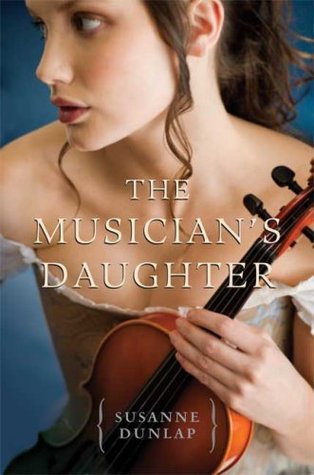
     I just finished the Musician's Daughter by Susanne Dunlap. Honestly I didn't really like it that much, especially in the beginning. This is because the book seemed a little generic and slow. Also I didn't like the ending because it left you needing more information. The author needed to add an epilogue or another chapter because it ended so abruptly. Although I wasn't a fan of this book here's a summary in case you want to read it.

     This book was about a girl name Theresa. Her father was murdered (this is not a spoiler alert...they tell you this within the first 5 pages) and she goes on a journey to try and find her fathers most sacred poession-his violin. While all of this is happening, her mother is completely and utterly oblivious because she is getting ready to have a baby. She never notices her daughter is missing for days which is a little wierd but that's what happens. Theresa has to overcome discrimination because in this time period she isn't seen as an equal and she has to learn to be brave and do things for herself. This may sound like an okay plot but the author drags it out through about 300 pages so it gets boring but if you are very dedicated to book you may enjoy it.

     I would give this book 2/5 stars because I think if the book was about 50 pages long it may have been interesting but the long, drawn-out version did not keep me interested. Also I like the authors word choice because it was unconventional and she used new vocabulary to me. Overall, I wouldn't really recommend this book to anyone unless they are willing and dedicated enough to finish a book when you are bored 75% of the time.

Monday, April 28, 2014

Figurative Languauge


Why do authors use figurative language? Some people don't really like figurative language because it can be hard to understand but it definitely serves a purpose in writing. In the book I’m reading, The Musician’s Daughter, Susan Dunlap uses a lot of figurative language. The main character Theresa it trying to figure out the mystery of her father’s death so the author uses a metaphor to express Theresa’s thoughts. It says, “No, Schnabl could not be the missing piece of the puzzle.” (Dunlap 235). This is a common comparison between a mystery and a puzzle but regardless, it helps the reader visualize the story better. Another example of figurative language is a hyperbole. A hyperbole is just an extreme exaggeration. Dunlap uses hyperboles a lot throughout the book because they help get the point across and make the situations seem direr. This is especially good since this book is a mystery. An example of a hyperbole in this book is when it says, “But I was tired to my bones…” (Dunlap 233). This is an exaggeration because we know it isn’t possible to be “tired to the bones” but it helps show the exhaustion Theresa is going through.

            I like how there are a lot of metaphors, hyperboles, and personifications in this book. I feel like it really clears up any confusion and it helps create a clearer image in your head. Also I like how some of the metaphors are very common (as you saw above), but some of them are very creative and open you up to new ideas. Occasionally there will be a comparison and I will have an ah-ha moment because I never thought of something that way before.

Tuesday, April 22, 2014

Krista Ramsey Column

Colum Assignment Part 1  

Column Assignment Part 2:

  I read a column by Krista Ramsey called Locking into the Magic of Legos. This column was about how some of the most sacred life lessons can be taught through Legos and these lessons don't need adults to facilitate them.

     The line I think was best written in this column is when she says, "They're in a world beyond learning objectives and select soccer, safely out of reach of arranged play dates and online language programs. Legos let them claim the two things adults don't even realize they need: space and silence." I think this quote really good because in the first sentence it says how Legos keep daily activities "safely out of reach." I think this part demonstrates the author's opinion very clearly because it shows these activities almost as a threat to childhood. Also, I like when she explains the two things children need. The way she uses the colon and then states the two things, space and silence, I think it emphasizes their importance by separating them from the rest of the sentence.

     Krista Ramsey's writing style varies a little from column to column. In all of them, h\she writes pretty casual but she has a strong opinion. 
 Her columns aren't usually humorous; they typically are a people and society although in the column Super Bowl QBs Score Points for Great Style she uses a little sarcasm to create humor. An example is when she says, "Probably half the population sees this as a problem and the other half, a blessing. The problem is both halves show up at the same events." She is talking about people's attire in this quote but she is sarcastically making fun of people's difference at the same time. Also the title itself it is a little humorous. She also writes about children a lot because both this column and the other column we read, For better vision, kids need time outdoors, are about kids as seen in the titles.

If I could ask Krista Ramsey three questions, I would ask her:

1. What inspires you to write about certain topics over others?
2. Do you get writers block and if so, how do you over come it?
3. How do you create your voice when writing?


Monday, April 7, 2014

Honor English Post 2

     Recently I've been reading The Musician's Daughter by Susan Dunlap. My favorite part of book is the plot in general. It's really interesting and when you just read a summary it sounds really good. It definitely engages the reader. Unfortunately I think the author explains things too much and it causes the reader to get bored with the book. This is especially present in the middle of the book because the narrator just explains her thoughts and all her theories to her father's murder instead of continuing with the plot. I like how Dunlap set up the order of events because the beginning of the book just jumps right in and it gets you attention. During the middle I wish Dunlap would have added more plot twists because it starts to get boring when you are just listening to thoughts but then it starts to pick up and get better.

     I also really like this book because it uses rich vocabulary. One sentence i love in this book is, "Mirela took the medallion in her hand and gazed at it as if she were trying to read the future in her palm." (163).  I feel like a lot of book uses similar language but this book has used a lot of new words to me. It also uses a lot of figurative language which does enhance the writing but sometimes it feel like there is too much and the book needs to be more straight to the point.

     I recommend this book to anyone who likes mystery but has a pretty good comprehension level because at time this book get confusing. This is because of all the figuartive language and description. So far I would give it 3/5 stars because I liked the plot but it just gets draggeed on too long. Overall it's a pretty good book and I think most people would enjoy it.

Tuesday, March 18, 2014

Honors English Post 1

      
I just started reading the Musician's Daughter, by Susanne Dulap, and I'm on page 28. All that has happened so far is the main character Theresa's father has died. He was a musician so Theresa has a love for music. She always wanted to play the violin but when her father dies and his violin goes missing and music becomes even more important to her. She wants to find out who killed her father and what happened that night through trying to find his violin. She is struggling with this though, because nobody will tell her anything about her father. To add to the clues, when they found her father's body, he had a mysterious gold watch. Theresa was confused by this because she though the murdered would have taken this because it seemed valuable.

       I think the way the author set up the plot so far was interest because within the first 5 pages you know Theresa's dad is dead. As soon as they tell you her dad is dead it switches to flashbacks of memories of her dad and then describes the setting for a while after that. You don't know anything about the murder for a while because as soon as it tells you what happened it just describes the setting. Theresa's family seems pretty rich at the beginning because her family has a nurse to care for the children and the way the author describes their house makes it seem luxurious but then Theresa explains how they had to bury their father with many other poor people so it is a little confusing. The thing I liked best so far was the fact that the story just started jumping in as soon as you started reading but I didn't really like all the description that followed the intro.

Thursday, February 27, 2014

Post 12: Reading Wishlist

This is my reading wish list. Here are few of the books I want to read:
  • Eleanor and Park- Rainbow Rowell
  • Heaven is for Real- Todd Burpo
  • Looking for Alaska-John Green
  • Where'd You Go Bernadette- Maria Semple
  • Uglies- Scott Westerfeld
  • Before I Fall- Lauren Oliver
  • The Host-Stephenie Meyer

Tuesday, February 25, 2014

Book 3 Review: Angle 3


            Someone Like You by Sarah Dessen and Skinny by Ibi Kaslik are two completely different books. Someone Like You is about a girl name Halley who has the “perfect” life until one summer. Her best friend Scarlett gets pregnant. To make matters worse, Scarlett is pregnant with her dead boyfriend’s child. Halley has to grow up quickly and be the strong one for Scarlett. Skinny, is sort of the opposite of Someone Like You. Skinny is from the point of view a college girl named Gizelle and her younger sister Holly. Gizelle had anorexia and bulimia and she is trying to heal from it. Her younger sister is deaf in one ear and has to deal with her own problems. Gizelle and Holly build a closer relation and bond through their struggles because they start to understand how each other feels. Although these books have different plots, they actually are connected in many ways.

 
            One way these books are connected is through their themes. They both have a theme of how trust and friendship can be strong enough to overcome anything. For example, in Someone Like You Scarlett’s mom wants her to have an abortion. Scarlett is torn. She doesn’t want to have to sacrifice the rest of her like for this one mistake but how could she kill the last piece of her dead boyfriend. Halley understands this. She looks out for Scarlett and supports her with the decision that she make unlike Scarlett’s mom.  Even though Halley gets in a huge amount of trouble she does it because that’s what best friends do. She gives up her freedom, her reputation, and her boyfriend all to help her best friend. In Skinny, Gizelle and Holly portray this same theme. At one point in the book, Holly is really struggling with school. She is getting in a lot of trouble and she can’t seem to understand math. Holly wants to drop out of school. She’s been in fights and been to the principal’s office on numerous occasions. Gizelle and Holly haven’t been getting along but when Holly comes to Gizelle, and truly tells her what’s going on, Gizelle is there for her. Holly opens up about her struggles and Gizelle first just listens and then when Holly is ready, she helps her find solutions. This really shows how just by them building a relationship not only as sister but also as friends helps them get through their
problem better.

             Someone Like You and Skinny are connected also by the way their characters grow. Holly may seem like a shallow character at the beginning because she’s just a teenager doing her own thing, but she develops into a strong and mature character. This shows how truly strong she is because it is way harder to become something you didn’t even know was possible than just already being there and maintaining that. An example of this is when in the beginning Gizelle uses anorexia and bulimia as an excuse but Holly doesn’t let her do that. Gizelle has just gotten out of the hospital after passing out from starving herself. She is living at home and still can’t accept herself for who she is. Gizelle and Holly get in a fight because Holly just wants her to realize that she is beautiful. Holly tells Gizelle, “So many people love you, Giselle, so why can't you, just a little?” This quote shows a lot of maturity because Holly is just a teenager and she is Gizelle’s younger sister. This shows how much Holly grows. Halley from Someone Like You has a similar transformation. In the beginning Halley is the one who waits for Scarlett to make the first move and is more reserved. She says, “Scarlett has always been the strong one…”, so it makes it hard for her to step up. When Scarlett’s life starts crumbling and her mom won’t support the decision she made about keeping the baby, she actually gets scared. She says to Halley, “It’s not like she’s being that supportive. This is all me, you know? I’m on my own, and it’s scary.” Halley realizes that Scarlett needs her for once. She steps up to the plate and act as Scarlett’s mom. She supports her at school where everyone gives them weird looks and she just listens to her when she needs to vent. Their roles completely switch. This show how much Halley grows as a person.

            A first glance, both books may be misinterpreted. Skinny is not a book about anorexia and bulimia. Rather, it is a book about overcoming it and how it affects your entire life even years after. Someone Like You is not just about drama and two girls summer. It is a lot deeper. It is more like a cautionary story of how your actions can affect your life. Both of these books are connected by this. People may think they are airy and shallow, but both of the book deal with serious topics and how these things can affect your life. They show the impact you decisions have on not only your life but your family and friends and everyone around you.

Because of its depth and plot in general, I would give Someone Like You 4 stars. I loved how relatable the characters are and I love the plot because there were many twists. I didn’t really like some minor characters because I thought they took away from the main characters a little but the author may have just been using them to show how developed the main characters were. I would give Skinny 4 ½ stars because I loved how it had a lot of surprises that were evenly spread out through the book to keep you interested. Also I love the plot and all the little subplots. It was a little confusing at the beginning because the narrator switches between Gizelle and Holly but once you get the hang of it, it’s amazing and I recommend it to anyone.


Thursday, February 13, 2014

Post 7: Book Trailer


Post 9: Likability


            The book I’m reading is Skinny. It has two narrators because it is told from two sisters perspectives. The older sister, Giselle, isn’t really a likeable character so far. She has a lot of problems and doesn’t cope with them well. She is anorexic and she kind of takes advantage of this to act like a brat. Her younger sister Holly is pretty likeable though. She calls Giselle out when she’s being rude and is like a typical teenage so she’s relatable. I think Holly fits in with the argument Wiener was making because she is predictable and easy while Giselle on the other hand is completely different. Readers like characters like Holly. Giselle is an angry female protagonist which is what Messud was saying rarely happens but she likes this type of character.

            I think Holly and the genre of the book, realistic fiction, fit together because usually in a realistic book there is an everyday female protagonist. Holly fits in with this stereotype. Giselle does not however. She is angry and she blames Holly and her dad for a lot of things. She is a little unruly and isn’t really likeable. I like how the author included both characters because I think it adds a lot of depth to the story. It allows you to see how the story would be told for the “typical” view and from an unconventional, real view. It helps you see two sides to the story and gives you a better perspective on the same situation.

Thursday, February 6, 2014

Post 8: Memoirs


I think that memoirs and nonfiction need to be 99% true. This is because the genre that they are publishing it in is telling people before they even read it that it is true.  People are expecting a true story and if they weren’t they would read a different genre. I don’t think the author should use half-truths just to make the story more interesting. As readers, we are relying on the author to tell the truth and most the time we don’t really have a way to verify it is the truth so if authors start telling half-truths, it will hurt their credibility. Saying this though, I believe that everybody’s opinion on an event or story will be different so what one person may think is true, another person who went through the same thing may think otherwise.

I disagree with David Shields because I think that the genre labels help readers find books they like. Although many books aren’t just one genre, I think readers acknowledge that. I think the labels that distinguish between fiction and nonfiction are important because if we didn’t have these labels, readers would be curious as to whether or not these things actually happened. The labels help us find the books we love and naturally gravitate towards rather than having to go through an entire book store. Even though many authors may not like the fine line between fiction and nonfiction I think readers like it and appreciate it so we definitely need these labels.

Monday, January 27, 2014

Post 6: Readicide


                I think that Readicide is a major problem in school because for so many students, school is the only place where they read. Once they have bad experiences reading in school they don’t want to read at home because they assume they won’t like it because it will be as boring as in school. Also the schools are only showing a narrow selection of books and aren’t exposing student to all types of books. I think genre fiction is just as worthy of being read because many books that are genre fiction are very good and student will get more out of reading them. I don’t think we should continue to teach literary fiction so exclusively because many kids don’t even read these books; they will just Spark note them. If every now and then they taught literary fiction, I think kids would have more of an appreciation for books and would be able to compare literary and genre fiction.

            I think we should add more genre fiction into the curriculum because there is hardly any genre fiction being taught. Schools are teaching books that are irrelevant to this day and age and although it is good to keep that part of our culture alive, it doesn’t need to be the only thing taught. I think swapping out classic literature for more modern books can be good and bad so we should only swap out some books. I think if we take away all the classics student will be missing a major topic but I think they teach too many classics and should only teach us a few so we understand how literature used to be. A 21st century English class reading list should contain popular books so kids will be excited about reading but also one or two classics. Literary fiction isn’t really relevant to our culture anymore but it think it shows how literature how evolved and changed so it is still important. Kids should read books because it teaches them comprehension, new vocabulary, and other skills that are greatly benefitted by reading so I think it is very important that kids enjoy reading so they will do it more often. 

Thursday, January 9, 2014

Post 5: Book Adaptation

The book I'm reading is Silver Linings Playbook by Matthew Quick. I think in the film version of this movie it would be hard to capture the main character Pat. This is because Pat is very emotional and he goes trough a lot of thing the normal person may not so it may be hard for an actor to protray this.

The first scene that I believe is essential to keep is the scene where Pat and Tiffany meet. I believe this is essential because when Pat walks Tiffany home and they cry together, it is the first time that Tiffany actually feels cared for and not taken advantage of since her husband died. Also she later references this time where Pat just comforts her in her letter to Pat. I think this scene seemed very real and it wasn't cliche in the book so I think they should keep it the same in te movie.

The next scene I think is essential to keep and not change is the scene where Ronnie and Veronica take Pat and Tiffany to the beach. I think this scene is essential because both Pat and Tiffany have "break downs" in this scene. I think this is important because it show how Pat and Tiffany are special and they can't really cope with problems like most people. If this scene were lost or changed it would show the struggles Pat anf Tiffany have to deal with and overcome on a daily bases. It would make their characters seem normal and wouldn't show how tough life can be for Pat and Tiffany.

The third scene I think is essential to keep and not change is the part where Pat finds out Tiffany has been writing all the letters from Nikki and they get in a huge argument. I think this scene shows the authentisity of Pat and Tiffany's relationship. It shows how unstable they may be which helps to show later on how even through huge disasters they can still make it work. If they cut this scene the ending wouldn't as monumental and wouldn't mean as much.

In the film version, I believe they would have to cut the part where Pat meets his therapist ater the Eagles game. I think this part is just unneccessary because there are several parts similar to this one and they don't really help tell the story. They only take up time that could be used for other scene that could help build up the plot. I think people would get bored because the book has several scene that are like this so we wouldn't need all of them to show the friendship between Pat and his therapist.

In the film version, I think they would also have to cut the scene where Pat is in the mental institution. This is because I think it may be off putting for some people. Also it would be hard to recreate in a movie because it doesn't really explain it that well in the book. I don't think it is that vital for the success of a movie because they could just show a few flashback to explain that he was in the institution.